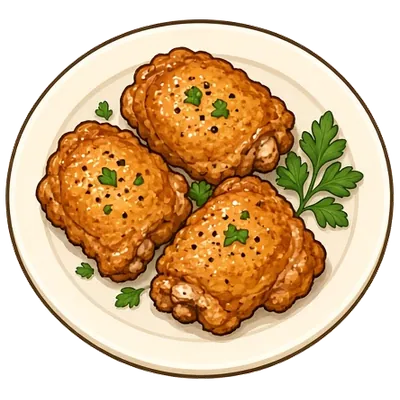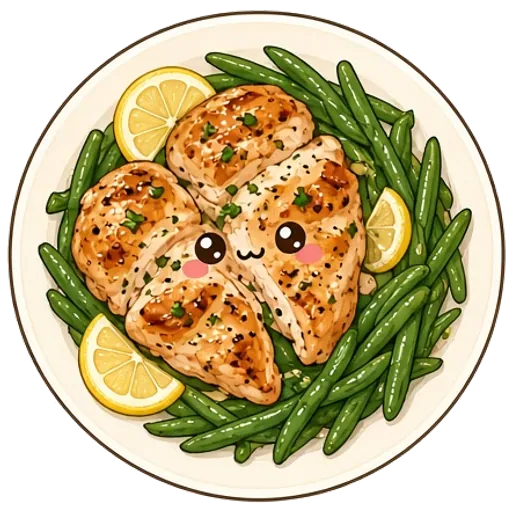
Juicy baked chicken with green beans
The juicy baked chicken breast you’ve been looking for, with blistered green beans on the same pan.
- 40 min total
- 10 min hands-on
- Anyone can make this
- Serves 2
- About $3.58 a serving
- 460 calories
- Good the next day
- Gluten-free
- Dairy-free

Dolly says: Make the full amount. It’s just as good for lunch the next day.
Ingredients
For 2 servings.
- 2 chicken breasts
- 12 oz green beans, trimmed
- 1 lemon, cut into wedges (optional)
From your pantry
- 1 tsp smoked paprika
- 1 tsp garlic powder
- ½ tsp onion powder
- ½ tsp dried oregano
- 1 tsp brown sugar
- 1 tsp salt
- ½ tsp black pepper
- 2 tbsp olive oil, divided
Each serving has about 460 calories, 54 g protein, 17 g carbs and 20 g fat, and costs about $3.58 at typical US grocery prices. Both are estimates from what the recipe uses.
Missing something?
- No chicken breasts? Boneless chicken thighs or chicken tenderloins work.
- No green beans? Frozen green beans work.
- No lemons? Limes work.
Steps
Tap an underlined word for a quick explanation.
the oven to 425°F and set out a .
Preheat. Preheating means turning the oven on before you start, so it’s fully hot when the food goes in. Food that starts in a cold oven cooks unevenly and doesn’t brown the same.
How you’ll know: The oven beeps or its light clicks off, usually 10 to 15 minutes after you turn it on.
Sheet pan. A sheet pan is a flat metal baking tray with a low rim all the way around. The rim catches juices, and the wide surface lets food spread out and brown.
How you’ll know: Everything fits in one layer with a little space between the pieces.
Stir the paprika, garlic powder, onion powder, oregano, brown sugar, salt and pepper together in a small bowl.
the chicken dry, rub it all over with 1 tablespoon oil, and sprinkle two thirds of the spice mix over both sides.
Pat dry. Patting dry means pressing paper towels onto food to soak up the moisture on its surface. Wet food steams instead of browning, so this is how you get a good sear and crisp skin.
How you’ll know: The surface feels tacky, not wet, and the last paper towel comes away barely damp.
 Dolly’s tip: Dry chicken holds the spices and browns. Wet chicken steams pale.
the green beans on the with the rest of the oil and spice mix, push them to the edges, and lay the chicken in the middle.
Toss. Tossing means gently lifting and turning food so everything gets coated, like pasta in sauce or vegetables in oil. It coats every piece evenly without mashing anything.
How you’ll know: Every piece looks glossy or evenly coated, with no dry spots hiding underneath.
Sheet pan. A sheet pan is a flat metal baking tray with a low rim all the way around. The rim catches juices, and the wide surface lets food spread out and brown.
How you’ll know: Everything fits in one layer with a little space between the pieces.
18 to 22 minutes, until the thickest part of the chicken reads 165°F and the beans are blistered in spots.
Bake. Baking means cooking in the oven with dry heat all around the food. It cooks evenly from every side, so you can mostly leave it alone.
How you’ll know: It’s golden on top and passes the recipe’s check, like a clean toothpick or the right temperature.
Timer: 20 min
Dolly’s tip: Check the thickest breast at 18 minutes. Every minute past 165°F dries it out, so this check is what keeps it juicy.Food safety: Chicken is done at 165°F in the thickest part. A thermometer is the only sure check. Without one, cut into the thickest piece: it should be white all the way through, with no pink.
Move the chicken to a board and let it 5 minutes, so the juices stay inside when you cut it.
Rest. Resting means letting cooked meat sit for a few minutes before you cut it. It keeps cooking gently, and more of the juice stays in the meat instead of running onto the board.
How you’ll know: Loosely covered with foil, it stays hot, and very little juice runs out when you slice it.
Timer: 5 min
the chicken across the breast and serve with the green beans and lemon wedges.
Slice. Slicing means cutting food into flat pieces of about the same thickness. Even slices cook evenly, so none are raw while others burn.
How you’ll know: Lay a few side by side: they’re close to the same thickness from one end to the other.

Plan this in Dollop, and get the grocery list
Dollop puts this dinner on a night that suits your week, lists only what you still need to buy, and walks you through each step while you cook.