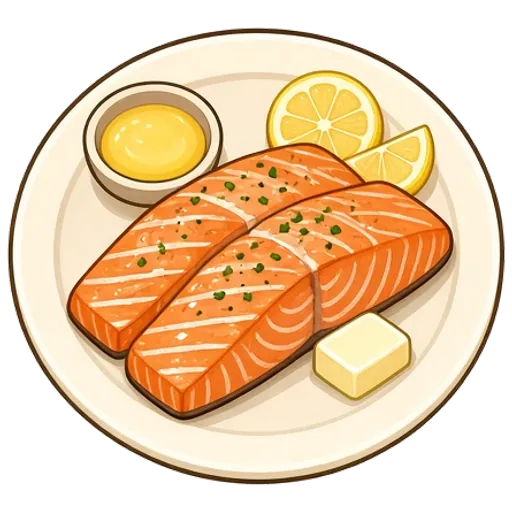
Butter-basted salmon
Crisp skin underneath, a silky middle, and browned butter spooned over the top in the last minute.
- 20 min total
- 15 min hands-on
- Follow-a-recipe easy
- Serves 2
- About $4.48 a serving
- 510 calories
- Gluten-free

Dolly says: Read the steps once before you start. Everything goes smoother after that.
Ingredients
For 2 servings.
- 2 salmon fillets, skin on
- 1 tbsp ghee
- 2 tbsp butter
- ½ lemon, cut into wedges (optional)
From your pantry
- ¾ tsp salt
- ¼ tsp black pepper
Each serving has about 510 calories, 35 g protein, 0 g carbs and 41 g fat, and costs about $4.48 at typical US grocery prices. Both are estimates from what the recipe uses.
Missing something?
- No lemons? Limes work.
Steps
Tap an underlined word for a quick explanation.
the salmon very dry with paper towels, skin especially, then all over with the salt and pepper.
Pat dry. Patting dry means pressing paper towels onto food to soak up the moisture on its surface. Wet food steams instead of browning, so this is how you get a good sear and crisp skin.
How you’ll know: The surface feels tacky, not wet, and the last paper towel comes away barely damp.
Season. Seasoning means adding salt, pepper or spices to bring out a food’s flavor. A little at a few stages tastes better than a lot all at the end.
How you’ll know: When you taste it, it tastes bright and like itself, not flat and not salty.
 Dolly’s tip: Dry skin is crisp skin. Wet skin sticks and steams.
Heat the ghee in a large nonstick over medium-high heat until it , about 2 minutes.
Skillet. A skillet is a frying pan: wide and flat with low, sloped sides. The shape lets steam escape, so food browns instead of stewing.
How you’ll know: It’s the pan you’d fry an egg in, and a 10 or 12 inch one handles most recipes.
Shimmering oil. Oil shimmers when it’s hot enough to cook: its surface looks rippled and wavy, like heat over a road. That’s your cue to add the food, just before the oil would start to smoke.
How you’ll know: The oil looks wavy and runs thin like water when you tilt the pan, with no smoke yet.
Medium-high heatTimer: 2 min
Lay the salmon in skin side down and press each fillet flat with a spatula for 10 seconds so the skin doesn’t curl.
Medium-high heat
to medium and cook without moving for 5 to 6 minutes, until the salmon has turned opaque about three quarters of the way up the sides.
Reduce the heat. It means turning the burner down, usually to medium-low or low, so food cooks gently instead of hard. Electric burners cool slowly, so lift the pan off for a moment if it’s bubbling hard.
How you’ll know: Within a minute the bubbling calms to a gentle simmer, or the sizzle turns quiet.
Medium heatTimer: 5 min 30 sec
Dolly’s tip: Watch the sides, not the top. The cooked part turns pale and opaque from the bottom up.Flip the fillets, add the butter, and tilt the pan. Spoon the foaming butter over the salmon for 1 to 2 minutes.
Medium heatTimer: 1 min 30 sec
Check the thickest part: it should flake easily with a fork and read 145°F. Move the salmon to plates skin side up.
Food safety: Fish is done at 145°F, when the middle looks opaque and flakes apart easily with a fork.
Spoon the butter from the pan over the top and serve with lemon wedges if you like.
Brown. Browning means cooking until the outside turns brown, which is where a lot of savory flavor comes from. Give food room and time without stirring, or it steams and stays gray.
How you’ll know: The food looks brown rather than gray, and the kitchen smells toasty and savory.

Plan this in Dollop, and get the grocery list
Dollop puts this dinner on a night that suits your week, lists only what you still need to buy, and walks you through each step while you cook.