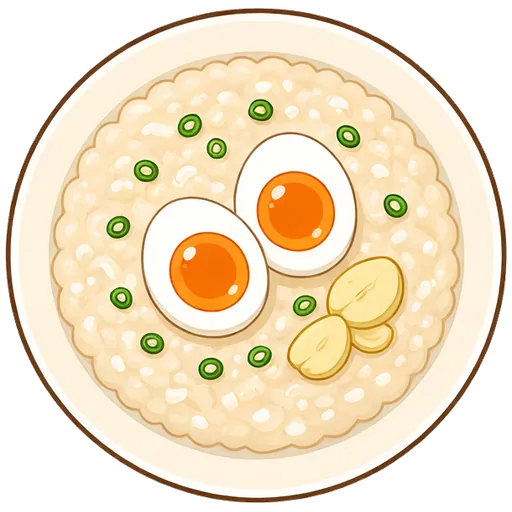
Garlicky rice porridge with jammy eggs
Rice simmered in broth until it turns silky and soft, topped with crispy garlic and a jammy egg, the bowl to make when you want to be looked after.
- 60 min total
- 15 min hands-on
- Anyone can make this
- Serves 2
- About $2.12 a serving
- 460 calories
- Good the next day
- Dairy-free

Dolly says: Make the full amount. It’s just as good for lunch the next day.
Ingredients
For 2 servings.
- ½ cup jasmine rice
- 4 cups chicken broth
- 1 tbsp fresh ginger, peeled and cut into thin matchsticks (optional)
- 2 large eggs
- 6 cloves garlic, thinly sliced
- 2 green onions, thinly sliced (optional)
- 1 tsp sesame oil (optional)
From your pantry
- 2 cups water
- 3 tbsp vegetable oil
- ½ tsp salt
- 2 tsp soy sauce
Each serving has about 460 calories, 13 g protein, 42 g carbs and 26 g fat, and costs about $2.12 at typical US grocery prices. Both are estimates from what the recipe uses.
Missing something?
- No jasmine rice? Long-grain white rice or basmati rice works.
- No chicken broth? Vegetable broth or bone broth works.
- No green onions? Chives work.
Steps
Tap an underlined word for a quick explanation.
the rice in a strainer until the water runs mostly clear, then put it in a large pot with the broth, 2 cups water and the ginger.
Rinse. Rinsing means running cold water over rice or canned beans in a strainer while you swish them around. It washes off loose starch and can liquid, so rice cooks up fluffy and beans taste clean.
How you’ll know: The water running out goes from cloudy to mostly clear; it doesn’t have to be perfect.
over high heat, stirring the bottom once or twice so the rice doesn’t stick.
Bring to a boil. It means heating a liquid on high until it’s fully boiling before you move on. A lid on the pot gets it there faster, which makes it a good moment to chop something.
How you’ll know: Big bubbles break all over the surface, and they keep coming when you lift the lid.
High heat
to low, set the , and for 45 minutes, stirring every 10 minutes, until the rice has broken down into a thick, creamy porridge.
Reduce the heat. It means turning the burner down, usually to medium-low or low, so food cooks gently instead of hard. Electric burners cool slowly, so lift the pan off for a moment if it’s bubbling hard.
How you’ll know: Within a minute the bubbling calms to a gentle simmer, or the sizzle turns quiet.
Lid ajar. Lid ajar means resting the lid on the pot slightly off-center, leaving a small gap. Some steam escapes, so the sauce thickens and doesn’t boil over, while most of the heat stays in.
How you’ll know: A thin wisp of steam drifts out of the gap, and the pot bubbles gently without spilling.
Simmer. Simmering means keeping a liquid just below a boil, with small bubbles rising gently. It cooks food evenly and lets a sauce thicken without scorching on the bottom.
How you’ll know: Small, lazy bubbles break the surface every second or so, and nothing is churning.
Low heatTimer: 45 min
 Dolly’s tip: It looks like watery rice for the first half hour. Keep going; it turns silky near the end.
While it simmers, bring a small of water . Lower in the eggs with a spoon and boil them for 7 minutes.
Saucepan. A saucepan is a pot with tall, straight sides and one long handle. It’s for things that need depth, like rice, sauces or a few boiled eggs.
How you’ll know: The food fills it about halfway, leaving room to bubble without spilling over.
Bring to a boil. It means heating a liquid on high until it’s fully boiling before you move on. A lid on the pot gets it there faster, which makes it a good moment to chop something.
How you’ll know: Big bubbles break all over the surface, and they keep coming when you lift the lid.
High heatTimer: 7 min
Dolly’s tip: Seven minutes gives a set white and a soft, jammy yolk.Food safety: For the safest eggs, cook until the whites are fully set and the yolks begin to thicken. Dishes made with eggs are done at 160°F.
Move the eggs to a bowl of cold water for 2 minutes, then them.
Peel. Peeling means removing the skin with a vegetable peeler or a small knife. It takes off tough or bitter skins, though potato and carrot skins are fine to leave on unless the recipe insists.
How you’ll know: The color underneath is even all over, with no patches of skin left behind.
Timer: 2 min
Dolly’s tip: Crack the wide end first. That’s where the air pocket is, and the shell comes away in big pieces.Put the oil and sliced garlic in a small over low heat. Cook, stirring often, 5 to 6 minutes, until the garlic is pale , then pour it all into a small bowl.
Skillet. A skillet is a frying pan: wide and flat with low, sloped sides. The shape lets steam escape, so food browns instead of stewing.
How you’ll know: It’s the pan you’d fry an egg in, and a 10 or 12 inch one handles most recipes.
Golden brown. Golden brown is the color of good toast, somewhere between yellow and light brown. It means the outside is cooked and crisp but not burnt.
How you’ll know: It looks like toast and smells toasty; dark brown with a bitter smell means it went too far.
Low heatTimer: 5 min 30 sec
Dolly’s tip: Garlic keeps browning after it leaves the pan, so pull it when it’s pale gold, not brown.Stir the salt and soy sauce into the porridge. Taste, and add more salt at a time until it tastes savory. If it’s too thick, stir in of water.
Pinch. A pinch is what you can hold between your thumb and two fingers, less than an eighth of a teaspoon. It’s a small, forgiving amount, so there’s no need to measure.
How you’ll know: It’s a light sprinkle you can barely see on the food, not a little pile.
Splash. A splash is a small, quick pour, about a teaspoon to a tablespoon. It’s there to loosen or brighten a dish, so the exact amount doesn’t matter.
How you’ll know: The dish looks a little looser or tastes a little brighter, not soupy.
Ladle into bowls, the eggs on top, and spoon over the garlic and its oil. Finish with green onions and a few drops of sesame oil.
Halve. Halving means cutting something into two equal pieces. Even halves cook at the same speed, so one doesn’t dry out while the other finishes.
How you’ll know: The two pieces look like mirror images of each other.
Crispy. Crispy means the outside is dry, firm and crunchy. It comes from high heat, a little oil and room in the pan, because crowded food steams and goes soft.
How you’ll know: It sounds crunchy when you tap or bite it, and it doesn’t flop when you lift it.

Plan this in Dollop, and get the grocery list
Dollop puts this dinner on a night that suits your week, lists only what you still need to buy, and walks you through each step while you cook.
More dinners like this
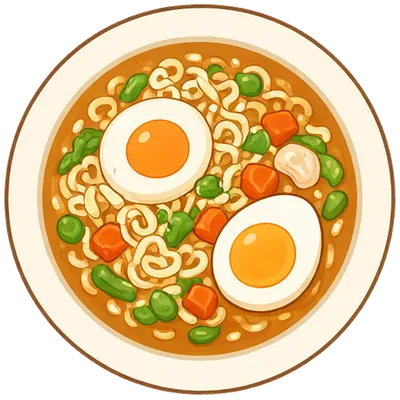
Better instant ramen with a soft egg
15 min
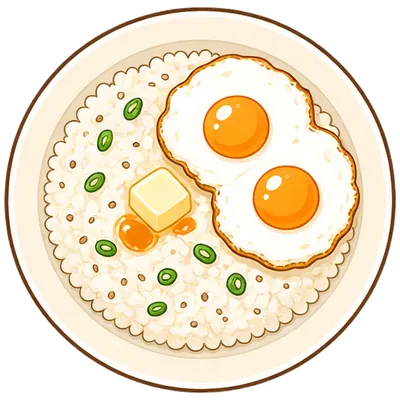
Butter soy rice with crispy fried eggs
30 min

Omurice (ketchup rice under an omelette)
50 min
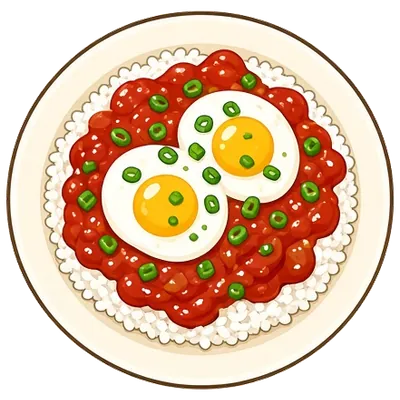
Tomato and egg over rice
35 min
Pantry dinners ›Cozy comfort food ›What to make with eggs and rice ›