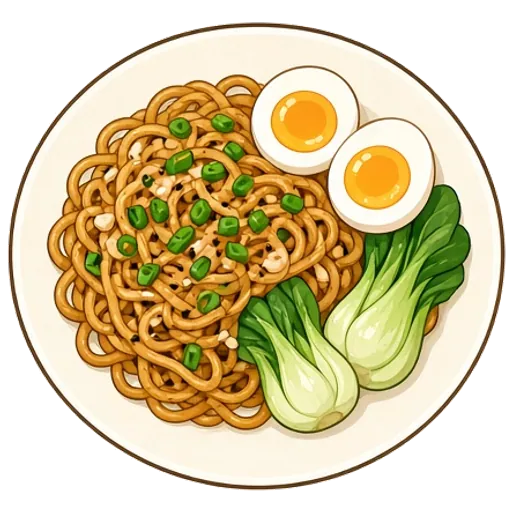
Garlic soy noodles with jammy eggs
Chewy noodles in a buttery garlic soy sauce, topped with eggs whose golden centers are soft and jammy.
- 35 min total
- 25 min hands-on
- Follow-a-recipe easy
- Serves 2
- About $2.47 a serving
- 760 calories
- Vegetarian

Dolly says: Read the steps once before you start. Everything goes smoother after that.
Ingredients
For 2 servings.
- 4 large eggs
- 5 cloves garlic, minced
- 1 tsp sesame oil
- 2 heads baby bok choy, halved lengthwise
- 3 stalks green onions, sliced
- 8 oz spaghetti
- 2 tbsp butter
- 1 tsp sesame seeds (optional)
From your pantry
- 3 tbsp soy sauce
- 1 tbsp brown sugar
- 1 tsp salt
- 1 pinch red pepper flakes (optional)
Each serving has about 760 calories, 32 g protein, 100 g carbs and 25 g fat, and costs about $2.47 at typical US grocery prices. Both are estimates from what the recipe uses.
Missing something?
- No green onions? Chives work.
- No spaghetti? Fettuccine works.
- No butter? Ghee works.
Steps
Tap an underlined word for a quick explanation.
Fill a large pot with water and bring it over high heat, and fill a bowl with cold water and a handful of ice.
Bring to a boil. It means heating a liquid on high until it’s fully boiling before you move on. A lid on the pot gets it there faster, which makes it a good moment to chop something.
How you’ll know: Big bubbles break all over the surface, and they keep coming when you lift the lid.
High heat
to medium so it’s at a gentle , and use a big spoon to lower the eggs in one at a time. Set a timer for 7 minutes.
Reduce the heat. It means turning the burner down, usually to medium-low or low, so food cooks gently instead of hard. Electric burners cool slowly, so lift the pan off for a moment if it’s bubbling hard.
How you’ll know: Within a minute the bubbling calms to a gentle simmer, or the sizzle turns quiet.
Boil. Boiling means heating a liquid until big bubbles rise and break all over the surface. It’s the fastest way to cook pasta, potatoes and eggs, because it’s as hot as water gets.
How you’ll know: Bubbles are breaking across the whole surface, not just at the edges, and steam is rising.
Medium heatTimer: 7 min
 Dolly’s tip: Lowering them gently keeps the shells from cracking on the bottom of the pot.
While the eggs cook, the garlic, the bok choy , the green onions, and stir the soy sauce, brown sugar and sesame oil together in a cup.
Mince. Mincing means chopping something into the tiniest pieces you can, smaller than a grain of rice. Tiny pieces melt into the dish, so you get the flavor without biting into a chunk of garlic.
How you’ll know: Every piece is tiny and about the same size, and the pile starts to look almost like a paste.
Halve. Halving means cutting something into two equal pieces. Even halves cook at the same speed, so one doesn’t dry out while the other finishes.
How you’ll know: The two pieces look like mirror images of each other.
Lengthwise. Lengthwise means cutting along the long side, from stem to tip, which gives long pieces. Crosswise is the other way, straight across the middle, which gives short, round ones.
How you’ll know: Lengthwise halves of a zucchini look like two little canoes; crosswise pieces look like coins.
Slice. Slicing means cutting food into flat pieces of about the same thickness. Even slices cook evenly, so none are raw while others burn.
How you’ll know: Lay a few side by side: they’re close to the same thickness from one end to the other.
When the timer goes off, move the eggs straight into the ice water and leave them for 5 minutes.
Timer: 5 min
Dolly’s tip: The ice bath stops the cooking so the yolks stay jammy, and it makes the shells slip right off.Food safety: For the safest eggs, cook until the whites are fully set and the yolks begin to thicken. Dishes made with eggs are done at 160°F.
Turn the heat back up to high, add the salt and noodles, and cook 1 minute less than the package says. Add the bok choy for the last 2 minutes.
High heatTimer: 9 min
Meanwhile, the butter in a large over low heat, add the garlic, and cook, stirring, until soft and but still pale, about 2 minutes.
Melt. Melting means gently heating something solid, like butter or cheese, until it turns liquid. Low or medium heat keeps it from browning or burning.
How you’ll know: It’s smooth and liquid, and butter may foam a little but hasn’t turned brown.
Skillet. A skillet is a frying pan: wide and flat with low, sloped sides. The shape lets steam escape, so food browns instead of stewing.
How you’ll know: It’s the pan you’d fry an egg in, and a 10 or 12 inch one handles most recipes.
Fragrant. Fragrant means cooking until you can clearly smell it, usually garlic or spices, often in about 30 seconds. That’s the moment the flavor is ready, just before it can burn.
How you’ll know: You can smell it from a step back, and garlic is pale gold, not brown.
Low heat
Scoop out ½ cup of , then the noodles and bok choy.
Reserve pasta water. It means scooping out a cup of the starchy cooking water before you drain the pasta. A splash helps the sauce cling and turn silky, and it’s the step everyone forgets.
How you’ll know: A mug of cloudy water is sitting by the stove before the pasta goes into the colander.
Drain. Draining means pouring off liquid, like tipping pasta into a colander or spooning extra fat out of the pan. Pour hot grease into a can or jar, not the sink, where it hardens and clogs the pipes.
How you’ll know: Only a few drips are left, and the food isn’t sitting in a puddle.
Add the noodles, bok choy, sauce and of to the skillet and over medium heat until glossy, about 1 minute.
Splash. A splash is a small, quick pour, about a teaspoon to a tablespoon. It’s there to loosen or brighten a dish, so the exact amount doesn’t matter.
How you’ll know: The dish looks a little looser or tastes a little brighter, not soupy.
Reserve pasta water. It means scooping out a cup of the starchy cooking water before you drain the pasta. A splash helps the sauce cling and turn silky, and it’s the step everyone forgets.
How you’ll know: A mug of cloudy water is sitting by the stove before the pasta goes into the colander.
Toss. Tossing means gently lifting and turning food so everything gets coated, like pasta in sauce or vegetables in oil. It coats every piece evenly without mashing anything.
How you’ll know: Every piece looks glossy or evenly coated, with no dry spots hiding underneath.
Medium heat
the eggs under a trickle of cold water and cut them in half .
Peel. Peeling means removing the skin with a vegetable peeler or a small knife. It takes off tough or bitter skins, though potato and carrot skins are fine to leave on unless the recipe insists.
How you’ll know: The color underneath is even all over, with no patches of skin left behind.
Lengthwise. Lengthwise means cutting along the long side, from stem to tip, which gives long pieces. Crosswise is the other way, straight across the middle, which gives short, round ones.
How you’ll know: Lengthwise halves of a zucchini look like two little canoes; crosswise pieces look like coins.
Dolly’s tip: Crack the wide end first. There’s an air pocket there that gives you a head start.Twirl the noodles into bowls, set the eggs on top, and finish with the green onions, sesame seeds and red pepper flakes.

Plan this in Dollop, and get the grocery list
Dollop puts this dinner on a night that suits your week, lists only what you still need to buy, and walks you through each step while you cook.