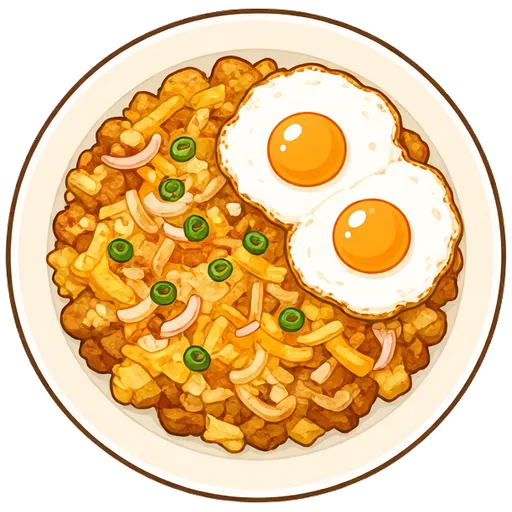
Crispy potato hash with fried eggs
Golden, crunchy-edged potatoes and soft onions with runny-yolked eggs on top, the diner breakfast that makes a very good dinner.
- 40 min total
- 30 min hands-on
- Follow-a-recipe easy
- Serves 2
- About $2.02 a serving
- 550 calories
- Vegetarian
- Gluten-free

Dolly says: Read the steps once before you start. Everything goes smoother after that.
Ingredients
For 2 servings.
- 2 russet potatoes, scrubbed
- 1 yellow onion, diced
- ½ cup cheddar cheese, grated (optional)
- 4 large eggs
- 2 green onions, thinly sliced (optional)
- 1 tsp hot sauce, for serving (optional)
From your pantry
- 2 tbsp water
- 3 tbsp vegetable oil, divided
- 1 tsp salt, divided
- ¼ tsp black pepper
- 1 tsp smoked paprika
- ½ tsp garlic powder
Each serving has about 550 calories, 19 g protein, 51 g carbs and 30 g fat, and costs about $2.02 at typical US grocery prices. Both are estimates from what the recipe uses.
Missing something?
- No russet potatoes? Yukon gold potatoes work.
- No yellow onions? White onions or red onions work.
- No cheddar cheese? Shredded cheddar or monterey jack cheese or mexican blend cheese works.
- No green onions? Chives work.
- No hot sauce? Sriracha works.
Steps
Tap an underlined word for a quick explanation.
Cut the potatoes into ½-inch ; there’s no need to peel them. the onion.
Cube. Cubing means cutting food into chunky, even squares, usually three quarters of an inch to an inch. Same-size cubes cook at the same speed and brown on every side.
How you’ll know: Your pieces look like a handful of sugar cubes, a little bigger than diced, all close to the same size.
Dice. Dicing means cutting food into small, even cubes, usually a quarter to half an inch across. Pieces the same size cook at the same speed, so nothing burns while the rest catches up.
How you’ll know: Your pieces are little cubes about the size of a chickpea, and they all look close to the same.
 Dolly’s tip: Small, even cubes are the secret. They cook through before the outsides burn.
Put the potatoes in a microwave-safe bowl with 2 tablespoons water, cover with a plate and microwave 5 minutes, until just tender when poked with a fork. well.
Drain. Draining means pouring off liquid, like tipping pasta into a colander or spooning extra fat out of the pan. Pour hot grease into a can or jar, not the sink, where it hardens and clogs the pipes.
How you’ll know: Only a few drips are left, and the food isn’t sitting in a puddle.
Timer: 5 min
Dolly’s tip: This head start means the potatoes only need to get crisp in the pan, not cook through.Heat 2 tablespoons oil in a large over medium-high until it . Add the potatoes in one layer and cook without stirring for 5 minutes, until underneath.
Skillet. A skillet is a frying pan: wide and flat with low, sloped sides. The shape lets steam escape, so food browns instead of stewing.
How you’ll know: It’s the pan you’d fry an egg in, and a 10 or 12 inch one handles most recipes.
Shimmering oil. Oil shimmers when it’s hot enough to cook: its surface looks rippled and wavy, like heat over a road. That’s your cue to add the food, just before the oil would start to smoke.
How you’ll know: The oil looks wavy and runs thin like water when you tilt the pan, with no smoke yet.
Brown. Browning means cooking until the outside turns brown, which is where a lot of savory flavor comes from. Give food room and time without stirring, or it steams and stays gray.
How you’ll know: The food looks brown rather than gray, and the kitchen smells toasty and savory.
Medium-high heatTimer: 5 min
Dolly’s tip: Leave them alone. Stirring too early is what makes potatoes steam instead of crisp.Stir in the onion, ¾ teaspoon salt, the pepper, smoked paprika and garlic powder. Cook, stirring every couple of minutes, 8 to 10 minutes, until the potatoes are .
Crispy. Crispy means the outside is dry, firm and crunchy. It comes from high heat, a little oil and room in the pan, because crowded food steams and goes soft.
How you’ll know: It sounds crunchy when you tap or bite it, and it doesn’t flop when you lift it.
Medium-high heatTimer: 9 min
If you’re using cheese, scatter it over the hash. Make four little wells in it with a spoon.
the last tablespoon of oil into the wells, crack an egg into each, and sprinkle the eggs with the rest of the salt.
Drizzle. Drizzling means pouring a thin, slow stream over the top of something. A thin stream spreads a little flavor a long way.
How you’ll know: You see thin lines across the food, not a puddle collecting underneath.
Turn the heat to medium, cover the pan, and cook 4 to 6 minutes, until the whites are completely set and the yolks are just starting to .
Thicken. Thickening means cooking a sauce or soup until it’s less runny, by simmering it down or adding something like cornstarch. A thicker sauce clings to food instead of pooling on the plate.
How you’ll know: It coats the back of a spoon, and a line drawn through it with your finger holds its shape.
Medium heatTimer: 5 min
Dolly’s tip: Peek after 4 minutes. The whites should be solid white, with no clear, jiggly patches around the yolk.Food safety: For the safest eggs, cook until the whites are fully set and the yolks begin to thicken. Dishes made with eggs are done at 160°F.
Scatter the green onions on top and serve straight from the pan, with hot sauce on the side.

Plan this in Dollop, and get the grocery list
Dollop puts this dinner on a night that suits your week, lists only what you still need to buy, and walks you through each step while you cook.
More dinners like this
Crispy potato tacos
40 min
Spinach and cheddar frittata
35 min
West African–style peanut stew with sweet potatoes
45 min
White bean and cabbage soup
45 min
One-pan dinners ›Vegetarian dinners ›What to make with eggs and cheddar ›What to make with potatoes and cheddar ›