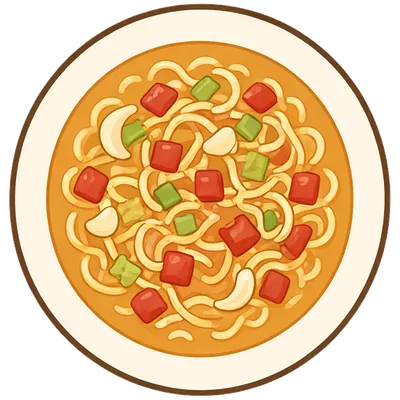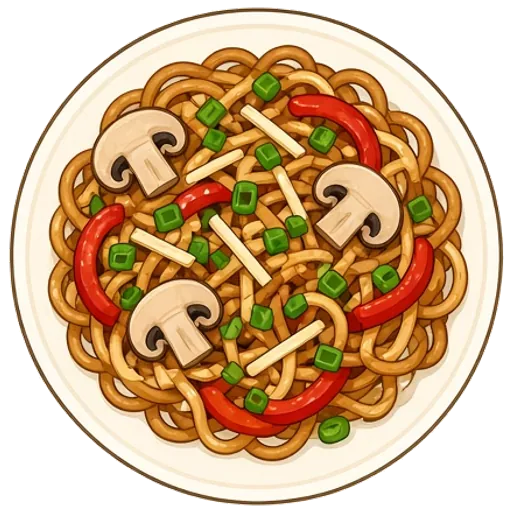
Vegetable lo mein
Slurpy noodles and crisp vegetables in a glossy, savory sauce, on the table faster than delivery.
- 35 min total
- 30 min hands-on
- A little more hands-on
- Serves 4
- About $2.02 a serving
- 380 calories
- Good the next day
- Vegan
- Dairy-free

Dolly says: Make the full amount. It’s just as good for lunch the next day.
Ingredients
For 4 servings.
- 8 oz baby bella mushrooms, sliced
- 1 red bell pepper, thinly sliced
- 3 cloves garlic, minced
- 1 tsp fresh ginger, grated
- 4 stalks green onions, cut into 2-inch pieces
- 1 tbsp sesame oil
- 8 oz spaghetti
- 1 cup shredded carrots
- 1½ cups snow peas
- 1 tsp sriracha (optional)
From your pantry
- 1 tbsp salt
- 3 tbsp soy sauce
- 1 tbsp brown sugar
- 2 tbsp vegetable oil
Each serving has about 380 calories, 12 g protein, 58 g carbs and 11 g fat, and costs about $2.02 at typical US grocery prices. Both are estimates from what the recipe uses.
Missing something?
- No baby bella mushrooms? White mushrooms work.
- No red bell peppers? Yellow bell peppers work.
- No green onions? Chives work.
- No spaghetti? Fettuccine works.
- No shredded carrots? Carrots work.
- No snow peas? Sugar snap peas work.
- No sriracha? Hot sauce works.
Steps
Tap an underlined word for a quick explanation.
Fill a large pot with water and bring it over high heat.
Bring to a boil. It means heating a liquid on high until it’s fully boiling before you move on. A lid on the pot gets it there faster, which makes it a good moment to chop something.
How you’ll know: Big bubbles break all over the surface, and they keep coming when you lift the lid.
High heat
While it heats, the mushrooms and pepper, the garlic, the ginger, and cut the green onions into 2-inch pieces.
Slice. Slicing means cutting food into flat pieces of about the same thickness. Even slices cook evenly, so none are raw while others burn.
How you’ll know: Lay a few side by side: they’re close to the same thickness from one end to the other.
Mince. Mincing means chopping something into the tiniest pieces you can, smaller than a grain of rice. Tiny pieces melt into the dish, so you get the flavor without biting into a chunk of garlic.
How you’ll know: Every piece is tiny and about the same size, and the pile starts to look almost like a paste.
Grate. Grating means rubbing food across the holes of a grater to make fine shreds or flakes. It spreads cheese, garlic or ginger evenly through a dish so it melts right in.
How you’ll know: Even shreds fall off the back of the grater, and you stop while the piece is still big enough to hold.
 Dolly’s tip: Stir-frying moves fast, so everything has to be cut and waiting before the skillet gets hot.
the soy sauce, brown sugar and sesame oil in a small bowl.
Whisk. Whisking means beating quickly with a whisk or a fork to blend things together. It smooths out lumps and mixes eggs, oil or sauces evenly.
How you’ll know: It all looks one even color and texture, with no streaks or lumps.
Add the salt and spaghetti to the water and set a timer for 1 minute less than the package says.
Boil. Boiling means heating a liquid until big bubbles rise and break all over the surface. It’s the fastest way to cook pasta, potatoes and eggs, because it’s as hot as water gets.
How you’ll know: Bubbles are breaking across the whole surface, not just at the edges, and steam is rising.
High heatTimer: 8 min
Meanwhile, heat the vegetable oil in a large over high heat until it . Add the mushrooms, leave them alone for 2 minutes, then until , about 2 minutes more.
Skillet. A skillet is a frying pan: wide and flat with low, sloped sides. The shape lets steam escape, so food browns instead of stewing.
How you’ll know: It’s the pan you’d fry an egg in, and a 10 or 12 inch one handles most recipes.
Shimmering oil. Oil shimmers when it’s hot enough to cook: its surface looks rippled and wavy, like heat over a road. That’s your cue to add the food, just before the oil would start to smoke.
How you’ll know: The oil looks wavy and runs thin like water when you tilt the pan, with no smoke yet.
Stir-fry. Stir-frying means cooking small pieces fast over high heat in a little oil, stirring almost constantly. It moves quickly, so have everything chopped and ready before the pan gets hot.
How you’ll know: It sizzles loudly the whole time, and the vegetables turn bright and tender-crisp in minutes.
Brown. Browning means cooking until the outside turns brown, which is where a lot of savory flavor comes from. Give food room and time without stirring, or it steams and stays gray.
How you’ll know: The food looks brown rather than gray, and the kitchen smells toasty and savory.
High heatTimer: 2 min
Add the pepper, carrots and snow peas and until , about 2 minutes. Add the garlic, ginger and green onions and stir for 30 seconds.
Stir-fry. Stir-frying means cooking small pieces fast over high heat in a little oil, stirring almost constantly. It moves quickly, so have everything chopped and ready before the pan gets hot.
How you’ll know: It sizzles loudly the whole time, and the vegetables turn bright and tender-crisp in minutes.
Tender-crisp. Tender-crisp means vegetables cooked until just tender but still with a little snap. They keep their bright color and crunch instead of going soft and dull.
How you’ll know: A fork goes in with slight resistance, and the color is bright, not olive or gray.
High heat
Dolly’s tip: If the garlic starts browning too fast, pull the pan off the heat for a few seconds.When the noodle timer goes off, scoop out ½ cup of , then the noodles.
Reserve pasta water. It means scooping out a cup of the starchy cooking water before you drain the pasta. A splash helps the sauce cling and turn silky, and it’s the step everyone forgets.
How you’ll know: A mug of cloudy water is sitting by the stove before the pasta goes into the colander.
Drain. Draining means pouring off liquid, like tipping pasta into a colander or spooning extra fat out of the pan. Pour hot grease into a can or jar, not the sink, where it hardens and clogs the pipes.
How you’ll know: Only a few drips are left, and the food isn’t sitting in a puddle.
Dolly’s tip: The starchy water helps the sauce cling to the noodles. It’s the step everyone forgets.Add the noodles and sauce to the skillet and with tongs over medium-high heat for 1 to 2 minutes, adding of if it looks dry, until glossy.
Toss. Tossing means gently lifting and turning food so everything gets coated, like pasta in sauce or vegetables in oil. It coats every piece evenly without mashing anything.
How you’ll know: Every piece looks glossy or evenly coated, with no dry spots hiding underneath.
Splash. A splash is a small, quick pour, about a teaspoon to a tablespoon. It’s there to loosen or brighten a dish, so the exact amount doesn’t matter.
How you’ll know: The dish looks a little looser or tastes a little brighter, not soupy.
Reserve pasta water. It means scooping out a cup of the starchy cooking water before you drain the pasta. A splash helps the sauce cling and turn silky, and it’s the step everyone forgets.
How you’ll know: A mug of cloudy water is sitting by the stove before the pasta goes into the colander.
Medium-high heat
Serve right away, with sriracha on the side.

Plan this in Dollop, and get the grocery list
Dollop puts this dinner on a night that suits your week, lists only what you still need to buy, and walks you through each step while you cook.