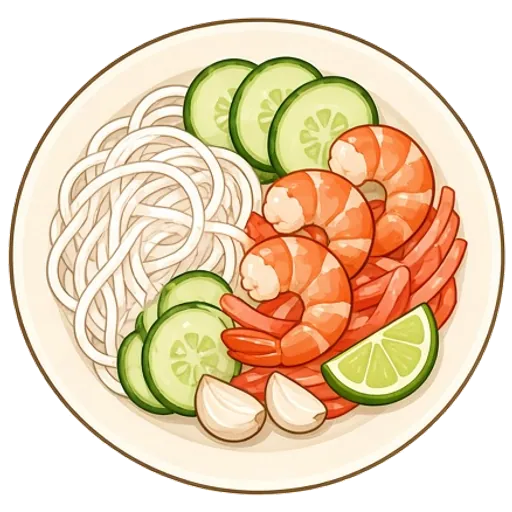
Vietnamese-style shrimp noodle bowls
Garlicky shrimp over cool rice noodles and crunchy vegetables, drenched in a sweet, tangy lime dressing you’ll want on everything.
- 30 min total
- 30 min hands-on
- Follow-a-recipe easy
- Serves 2
- About $6.12 a serving
- 550 calories
- Gluten-free
- Dairy-free

Dolly says: Read the steps once before you start. Everything goes smoother after that.
Ingredients
For 2 servings.
- 2 tbsp fish sauce
- 2 limes
- 3 cloves garlic, minced, divided
- 4 oz rice noodles, thin vermicelli
- 1 cucumber
- 2 cups romaine lettuce
- ¼ cup cilantro
- 12 oz raw shrimp, peeled, deveined and thawed
- 1 cup shredded carrots
- ¼ cup fresh mint, leaves (optional)
- 2 tbsp peanuts, chopped (optional)
From your pantry
- 8 cups water
- 2 tbsp sugar
- ¼ tsp red pepper flakes
- ¼ tsp salt
- 1 tbsp vegetable oil
Each serving has about 550 calories, 42 g protein, 80 g carbs and 9 g fat, and costs about $6.12 at typical US grocery prices. Both are estimates from what the recipe uses.
Missing something?
- No limes? Lemons work.
- No cucumbers? English cucumbers or mini cucumbers work.
- No romaine lettuce? Green leaf lettuce or iceberg lettuce or butter lettuce works.
- No cilantro? Fresh parsley works.
- No raw shrimp? Frozen raw shrimp works.
- No shredded carrots? Carrots work.
- No peanuts? Cashews work.
Steps
Tap an underlined word for a quick explanation.
Bring a large pot of water over high heat for the noodles.
Bring to a boil. It means heating a liquid on high until it’s fully boiling before you move on. A lid on the pot gets it there faster, which makes it a good moment to chop something.
How you’ll know: Big bubbles break all over the surface, and they keep coming when you lift the lid.
High heat
Make the dressing: the fish sauce, 3 tbsp of lime juice, the sugar, 3 tbsp warm water, 1 clove of the garlic and the pepper flakes in a jar until the sugar dissolves.
Stir. Stirring means moving food around with a spoon or spatula so it cooks evenly and doesn’t stick. Unless the recipe says constantly, every so often is plenty, and it gives food time to brown.
How you’ll know: When you drag the spoon across the bottom, nothing is sticking or scorching.
Taste it: it should be salty, sour and sweet all at once. Add more lime or sugar until it tastes balanced.
 Dolly’s tip: Fish sauce smells strong in the bottle and tastes wonderful in the dressing. Trust it.
Add the noodles to the water and cook for 3 to 5 minutes, or as the package says, until soft but still springy.
Boil. Boiling means heating a liquid until big bubbles rise and break all over the surface. It’s the fastest way to cook pasta, potatoes and eggs, because it’s as hot as water gets.
How you’ll know: Bubbles are breaking across the whole surface, not just at the edges, and steam is rising.
High heatTimer: 4 min
the noodles and them under cold water until cool, with your fingers so they don’t clump.
Drain. Draining means pouring off liquid, like tipping pasta into a colander or spooning extra fat out of the pan. Pour hot grease into a can or jar, not the sink, where it hardens and clogs the pipes.
How you’ll know: Only a few drips are left, and the food isn’t sitting in a puddle.
Rinse. Rinsing means running cold water over rice or canned beans in a strainer while you swish them around. It washes off loose starch and can liquid, so rice cooks up fluffy and beans taste clean.
How you’ll know: The water running out goes from cloudy to mostly clear; it doesn’t have to be perfect.
Toss. Tossing means gently lifting and turning food so everything gets coated, like pasta in sauce or vegetables in oil. It coats every piece evenly without mashing anything.
How you’ll know: Every piece looks glossy or evenly coated, with no dry spots hiding underneath.
the cucumber into thin half-moons, slice the lettuce into ribbons, and the cilantro.
Slice. Slicing means cutting food into flat pieces of about the same thickness. Even slices cook evenly, so none are raw while others burn.
How you’ll know: Lay a few side by side: they’re close to the same thickness from one end to the other.
Chop. Chopping means cutting food into bite-size pieces that don’t need to be neat. Keep them roughly the same size so everything cooks evenly.
How you’ll know: Your pieces are about half an inch and roughly alike, even if none of them are pretty.
the shrimp dry and with the salt, then heat the oil in a large over medium-high heat until it .
Pat dry. Patting dry means pressing paper towels onto food to soak up the moisture on its surface. Wet food steams instead of browning, so this is how you get a good sear and crisp skin.
How you’ll know: The surface feels tacky, not wet, and the last paper towel comes away barely damp.
Season. Seasoning means adding salt, pepper or spices to bring out a food’s flavor. A little at a few stages tastes better than a lot all at the end.
How you’ll know: When you taste it, it tastes bright and like itself, not flat and not salty.
Skillet. A skillet is a frying pan: wide and flat with low, sloped sides. The shape lets steam escape, so food browns instead of stewing.
How you’ll know: It’s the pan you’d fry an egg in, and a 10 or 12 inch one handles most recipes.
Shimmering oil. Oil shimmers when it’s hot enough to cook: its surface looks rippled and wavy, like heat over a road. That’s your cue to add the food, just before the oil would start to smoke.
How you’ll know: The oil looks wavy and runs thin like water when you tilt the pan, with no smoke yet.
Medium-high heat
Cook the shrimp with the rest of the garlic for 2 to 3 minutes, flipping once, until pink and opaque all the way through.
Medium-high heatTimer: 2 min 30 sec
Food safety: Shrimp are done when they turn pink and opaque all the way through and curl into a loose C. A tight O means overcooked, not unsafe.
Divide the noodles between two bowls, add the lettuce, cucumber, carrots and shrimp, and pour the dressing over everything.
Top with the cilantro, mint and peanuts, and serve with the rest of the lime in wedges.

Plan this in Dollop, and get the grocery list
Dollop puts this dinner on a night that suits your week, lists only what you still need to buy, and walks you through each step while you cook.