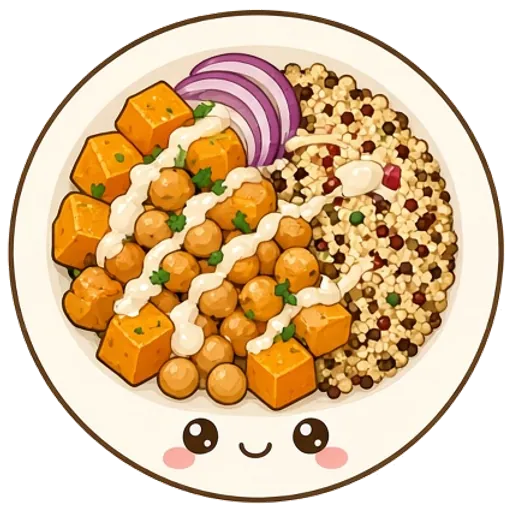
Roasted squash and chickpea Buddha bowls
Sweet roasted squash, crispy chickpeas and fluffy quinoa under a lemony tahini drizzle, the kind of bowl that looks like you have your life together.
- 50 min total
- 20 min hands-on
- Follow-a-recipe easy
- Serves 4
- About $3.37 a serving
- 520 calories
- Good the next day
- Vegan
- Gluten-free
- Dairy-free

Dolly says: Make the full amount. It’s just as good for lunch the next day.
Ingredients
For 4 servings.
- 20 oz cubed butternut squash
- 1 can chickpeas, drained and rinsed
- 1 red onion, cut into wedges
- 1 cup quinoa
- ¼ cup tahini
- 1 lemon, juiced
- 1 tsp maple syrup
- 1 clove garlic, grated
- 4 cups baby spinach
- 2 tbsp pepitas (optional)
From your pantry
- 2 tbsp olive oil
- 1 tsp smoked paprika
- 1¼ tsp salt, divided
- ¼ tsp black pepper
- 2¼ cups water, divided
Each serving has about 520 calories, 18 g protein, 72 g carbs and 20 g fat, and costs about $3.37 at typical US grocery prices. Both are estimates from what the recipe uses.
Missing something?
- No cubed butternut squash? Butternut squash works.
- No red onions? White onions or yellow onions work.
- No lemons? Limes work.
- No maple syrup? Honey works.
- No baby spinach? Kale or arugula works.
- No pepitas? Sunflower seeds work.
Steps
Tap an underlined word for a quick explanation.
the oven to 425°F and line a with .
Preheat. Preheating means turning the oven on before you start, so it’s fully hot when the food goes in. Food that starts in a cold oven cooks unevenly and doesn’t brown the same.
How you’ll know: The oven beeps or its light clicks off, usually 10 to 15 minutes after you turn it on.
Sheet pan. A sheet pan is a flat metal baking tray with a low rim all the way around. The rim catches juices, and the wide surface lets food spread out and brown.
How you’ll know: Everything fits in one layer with a little space between the pieces.
Parchment paper. Parchment paper is a nonstick, oven-safe paper for lining pans. Food lifts right off and cleanup is easy, but don’t swap in wax paper or put parchment under the broiler.
How you’ll know: It lies flat in the pan, and the food slides off when you lift it.
the chickpeas very dry with paper towels and cut the red onion into wedges about ½ inch thick.
Pat dry. Patting dry means pressing paper towels onto food to soak up the moisture on its surface. Wet food steams instead of browning, so this is how you get a good sear and crisp skin.
How you’ll know: The surface feels tacky, not wet, and the last paper towel comes away barely damp.
Pile the squash, chickpeas and onion on the , add the olive oil, smoked paprika, ¾ teaspoon salt and the pepper, and . Spread everything into one layer.
Sheet pan. A sheet pan is a flat metal baking tray with a low rim all the way around. The rim catches juices, and the wide surface lets food spread out and brown.
How you’ll know: Everything fits in one layer with a little space between the pieces.
Toss. Tossing means gently lifting and turning food so everything gets coated, like pasta in sauce or vegetables in oil. It coats every piece evenly without mashing anything.
How you’ll know: Every piece looks glossy or evenly coated, with no dry spots hiding underneath.
for 25 to 30 minutes, stirring once halfway, until the squash is soft and browned at the edges and the chickpeas are .
Roast. Roasting means cooking in a hot oven, around 400°F to 450°F, usually spread out on a sheet pan. The dry heat browns the outside and brings out sweetness, especially in vegetables.
How you’ll know: The edges are browned and a little crisp, and a fork slides easily into the thickest piece.
Crispy. Crispy means the outside is dry, firm and crunchy. It comes from high heat, a little oil and room in the pan, because crowded food steams and goes soft.
How you’ll know: It sounds crunchy when you tap or bite it, and it doesn’t flop when you lift it.
Timer: 25 min
 Dolly’s tip: Big cubes may need 5 more minutes. A fork should slide right into the squash.
Meanwhile, the quinoa in a fine strainer, then add it to a with 2 cups water and ¼ teaspoon salt. over high heat.
Rinse. Rinsing means running cold water over rice or canned beans in a strainer while you swish them around. It washes off loose starch and can liquid, so rice cooks up fluffy and beans taste clean.
How you’ll know: The water running out goes from cloudy to mostly clear; it doesn’t have to be perfect.
Saucepan. A saucepan is a pot with tall, straight sides and one long handle. It’s for things that need depth, like rice, sauces or a few boiled eggs.
How you’ll know: The food fills it about halfway, leaving room to bubble without spilling over.
Bring to a boil. It means heating a liquid on high until it’s fully boiling before you move on. A lid on the pot gets it there faster, which makes it a good moment to chop something.
How you’ll know: Big bubbles break all over the surface, and they keep coming when you lift the lid.
High heat
Dolly’s tip: Rinsing washes off quinoa’s natural bitter coating, so don’t skip it.Cover, to low, and cook 15 minutes, until the water is gone. Take it off the heat, leave it covered 5 minutes, then fluff with a fork.
Reduce the heat. It means turning the burner down, usually to medium-low or low, so food cooks gently instead of hard. Electric burners cool slowly, so lift the pan off for a moment if it’s bubbling hard.
How you’ll know: Within a minute the bubbling calms to a gentle simmer, or the sizzle turns quiet.
Low heatTimer: 15 min
the tahini, lemon juice, maple syrup, garlic, ¼ teaspoon salt and ¼ cup water in a small bowl until smooth and pourable.
Whisk. Whisking means beating quickly with a whisk or a fork to blend things together. It smooths out lumps and mixes eggs, oil or sauces evenly.
How you’ll know: It all looks one even color and texture, with no streaks or lumps.
Dolly’s tip: Tahini seizes up thick at first, then loosens as you keep whisking. Add water a spoonful at a time if it’s too thick to pour.Taste the dressing and adjust it: more lemon if it tastes heavy, of salt if it tastes flat, a little more maple if it’s bitter.
Pinch. A pinch is what you can hold between your thumb and two fingers, less than an eighth of a teaspoon. It’s a small, forgiving amount, so there’s no need to measure.
How you’ll know: It’s a light sprinkle you can barely see on the food, not a little pile.
Divide the spinach among four bowls, add the quinoa and roasted vegetables, generously with the dressing, and sprinkle with pepitas.
Drizzle. Drizzling means pouring a thin, slow stream over the top of something. A thin stream spreads a little flavor a long way.
How you’ll know: You see thin lines across the food, not a puddle collecting underneath.

Plan this in Dollop, and get the grocery list
Dollop puts this dinner on a night that suits your week, lists only what you still need to buy, and walks you through each step while you cook.