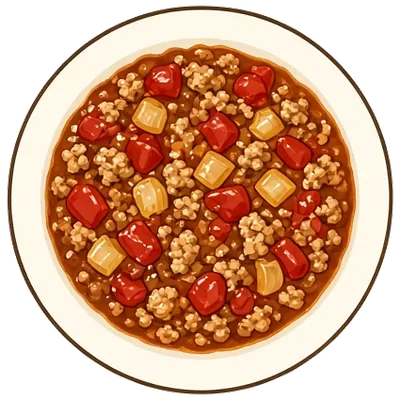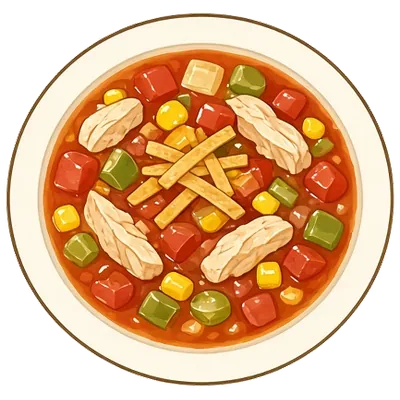
White chicken chili
A creamy, mild, cozy chili of chicken and white beans that gets its richness from the beans themselves.
- 45 min total
- 15 min hands-on
- Anyone can make this
- Serves 4
- About $3.01 a serving
- 430 calories
- Good the next day
- Gluten-free

Dolly says: Make the full amount. It’s just as good for lunch the next day.
Ingredients
For 4 servings.
- 1 yellow onion, diced
- 3 cloves garlic, minced
- 1 can diced green chiles
- 3 cups chicken broth
- 2 cans cannellini beans, drained and rinsed
- 1 lb chicken breasts
- 1 cup frozen corn
- 1 lime, halved
- 2 oz cream cheese (optional)
- ¼ cup cilantro, chopped (optional)
From your pantry
- 1 tbsp olive oil
- 2 tsp ground cumin
- 1 tsp dried oregano
- 1 tsp salt
- ½ tsp black pepper
Each serving has about 430 calories, 42 g protein, 50 g carbs and 8 g fat, and costs about $3.01 at typical US grocery prices. Both are estimates from what the recipe uses.
Missing something?
- No yellow onions? White onions or red onions work.
- No chicken broth? Vegetable broth or bone broth works.
- No chicken breasts? Boneless chicken thighs or chicken tenderloins work.
- No frozen corn? Canned corn works.
- No limes? Lemons work.
- No cilantro? Fresh parsley works.
Steps
Tap an underlined word for a quick explanation.
the onion, the garlic, and and the beans.
Dice. Dicing means cutting food into small, even cubes, usually a quarter to half an inch across. Pieces the same size cook at the same speed, so nothing burns while the rest catches up.
How you’ll know: Your pieces are little cubes about the size of a chickpea, and they all look close to the same.
Mince. Mincing means chopping something into the tiniest pieces you can, smaller than a grain of rice. Tiny pieces melt into the dish, so you get the flavor without biting into a chunk of garlic.
How you’ll know: Every piece is tiny and about the same size, and the pile starts to look almost like a paste.
Drain. Draining means pouring off liquid, like tipping pasta into a colander or spooning extra fat out of the pan. Pour hot grease into a can or jar, not the sink, where it hardens and clogs the pipes.
How you’ll know: Only a few drips are left, and the food isn’t sitting in a puddle.
Rinse. Rinsing means running cold water over rice or canned beans in a strainer while you swish them around. It washes off loose starch and can liquid, so rice cooks up fluffy and beans taste clean.
How you’ll know: The water running out goes from cloudy to mostly clear; it doesn’t have to be perfect.
Heat the oil in a large pot over medium, add the onion, and cook 5 minutes, stirring now and then, until soft and .
Translucent. Translucent means onions have cooked until they turn from white to slightly see-through. It shows they’re soft and sweet but haven’t started to brown.
How you’ll know: The onion looks glossy and a little see-through, bends easily, and has barely any color.
Medium heatTimer: 5 min
Stir in the garlic, cumin and oregano for 30 seconds, .
Fragrant. Fragrant means cooking until you can clearly smell it, usually garlic or spices, often in about 30 seconds. That’s the moment the flavor is ready, just before it can burn.
How you’ll know: You can smell it from a step back, and garlic is pale gold, not brown.
Medium heat
Add the green chiles, broth, 1 can of beans, the salt and pepper, and lay the chicken breasts in whole. .
Bring to a boil. It means heating a liquid on high until it’s fully boiling before you move on. A lid on the pot gets it there faster, which makes it a good moment to chop something.
How you’ll know: Big bubbles break all over the surface, and they keep coming when you lift the lid.
High heat
Turn the heat to low, cover, and 15 to 18 minutes, until the thickest breast reads 165°F.
Simmer. Simmering means keeping a liquid just below a boil, with small bubbles rising gently. It cooks food evenly and lets a sauce thicken without scorching on the bottom.
How you’ll know: Small, lazy bubbles break the surface every second or so, and nothing is churning.
Low heatTimer: 17 min
 Dolly’s tip: Gentle bubbles keep the chicken tender. If it’s boiling hard, turn it down.
Food safety: Chicken is done at 165°F in the thickest part. A thermometer is the only sure check. Without one, cut into the thickest piece: it should be white all the way through, with no pink.
Lift the chicken onto a board and it with two forks.
Shred. Shredding means making thin strips, either on the big holes of a grater or by pulling cooked meat apart with two forks. Shreds soak up sauce and mix evenly through a dish.
How you’ll know: Cooked chicken pulls apart into strands with little effort, and cheese comes off in long, loose strips.
Mash the second can of beans in a bowl with a fork, stir it into the pot with the corn, and 5 minutes to .
Simmer. Simmering means keeping a liquid just below a boil, with small bubbles rising gently. It cooks food evenly and lets a sauce thicken without scorching on the bottom.
How you’ll know: Small, lazy bubbles break the surface every second or so, and nothing is churning.
Thicken. Thickening means cooking a sauce or soup until it’s less runny, by simmering it down or adding something like cornstarch. A thicker sauce clings to food instead of pooling on the plate.
How you’ll know: It coats the back of a spoon, and a line drawn through it with your finger holds its shape.
Low heatTimer: 5 min
Dolly’s tip: The mashed beans are what make it creamy, with no flour or cream needed.Stir the chicken back in, squeeze in the lime, and in the cream cheese if you’re using it.
Melt. Melting means gently heating something solid, like butter or cheese, until it turns liquid. Low or medium heat keeps it from browning or burning.
How you’ll know: It’s smooth and liquid, and butter may foam a little but hasn’t turned brown.
Low heat
Taste, add salt if it needs it, and ladle into bowls with cilantro on top.

Plan this in Dollop, and get the grocery list
Dollop puts this dinner on a night that suits your week, lists only what you still need to buy, and walks you through each step while you cook.