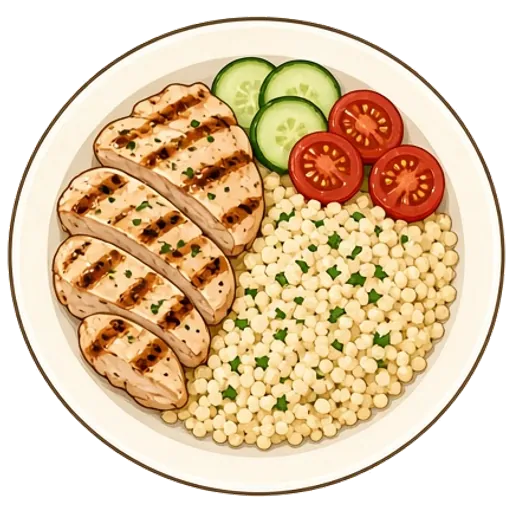
Mediterranean chicken and couscous
Golden spiced chicken on fluffy herbed couscous with cucumber, tomato and lemon, all on the table in about half an hour.
- 40 min total
- 25 min hands-on
- Follow-a-recipe easy
- Serves 4
- About $3.42 a serving
- 570 calories
- Good the next day

Dolly says: Make the full amount. It’s just as good for lunch the next day.
Ingredients
For 4 servings.
- 1½ lb chicken breasts, 2 large breasts
- 1¾ cups chicken broth
- 1½ cups couscous
- ½ english cucumber, diced
- 1 cup cherry tomatoes, halved
- ½ cup fresh parsley, chopped
- 1 lemon, zested and juiced
- ½ cup feta cheese, crumbled (optional)
From your pantry
- 1 tsp ground cumin
- 1 tsp smoked paprika
- 1 tsp dried oregano
- ½ tsp garlic powder
- 1½ tsp salt, divided
- ½ tsp black pepper
- 3 tbsp olive oil, divided
Each serving has about 570 calories, 48 g protein, 57 g carbs and 16 g fat, and costs about $3.42 at typical US grocery prices. Both are estimates from what the recipe uses.
Missing something?
- No chicken breasts? Boneless chicken thighs or chicken tenderloins work.
- No chicken broth? Vegetable broth or bone broth works.
- No english cucumbers? Cucumbers or mini cucumbers work.
- No fresh parsley? Cilantro works.
- No lemons? Limes work.
- No feta cheese? Goat cheese works.
Steps
Tap an underlined word for a quick explanation.
each chicken breast in half through the side, like opening a book, to make two thin cutlets.
Slice. Slicing means cutting food into flat pieces of about the same thickness. Even slices cook evenly, so none are raw while others burn.
How you’ll know: Lay a few side by side: they’re close to the same thickness from one end to the other.
 Dolly’s tip: Press your palm flat on top and cut slowly, keeping the knife level with the board.
Food safety: Wash your hands, the board and the knife with hot soapy water after touching raw meat, and don’t rinse raw chicken in the sink.
Mix the cumin, paprika, oregano, garlic powder, 1 teaspoon of salt and the pepper, and rub it all over the chicken.
Bring the broth and 1 tablespoon of oil in a over high heat.
Bring to a boil. It means heating a liquid on high until it’s fully boiling before you move on. A lid on the pot gets it there faster, which makes it a good moment to chop something.
How you’ll know: Big bubbles break all over the surface, and they keep coming when you lift the lid.
Saucepan. A saucepan is a pot with tall, straight sides and one long handle. It’s for things that need depth, like rice, sauces or a few boiled eggs.
How you’ll know: The food fills it about halfway, leaving room to bubble without spilling over.
High heat
in the couscous, cover and take the pan off the heat. Let it sit for 5 minutes while you the cucumber and the tomatoes.
Stir. Stirring means moving food around with a spoon or spatula so it cooks evenly and doesn’t stick. Unless the recipe says constantly, every so often is plenty, and it gives food time to brown.
How you’ll know: When you drag the spoon across the bottom, nothing is sticking or scorching.
Dice. Dicing means cutting food into small, even cubes, usually a quarter to half an inch across. Pieces the same size cook at the same speed, so nothing burns while the rest catches up.
How you’ll know: Your pieces are little cubes about the size of a chickpea, and they all look close to the same.
Halve. Halving means cutting something into two equal pieces. Even halves cook at the same speed, so one doesn’t dry out while the other finishes.
How you’ll know: The two pieces look like mirror images of each other.
Timer: 5 min
Heat the rest of the oil in a large over medium-high heat until it . Lay in the chicken and without moving it for 4 minutes, until deep .
Skillet. A skillet is a frying pan: wide and flat with low, sloped sides. The shape lets steam escape, so food browns instead of stewing.
How you’ll know: It’s the pan you’d fry an egg in, and a 10 or 12 inch one handles most recipes.
Shimmering oil. Oil shimmers when it’s hot enough to cook: its surface looks rippled and wavy, like heat over a road. That’s your cue to add the food, just before the oil would start to smoke.
How you’ll know: The oil looks wavy and runs thin like water when you tilt the pan, with no smoke yet.
Sear. Searing means cooking the outside of meat or fish in a hot pan, without moving it, until a deep brown crust forms. The crust is packed with flavor, and it only forms on a dry surface.
How you’ll know: It sizzles loudly the moment it goes in, and it lets go of the pan on its own when the crust is ready.
Golden brown. Golden brown is the color of good toast, somewhere between yellow and light brown. It means the outside is cooked and crisp but not burnt.
How you’ll know: It looks like toast and smells toasty; dark brown with a bitter smell means it went too far.
Medium-high heatTimer: 4 min
Dolly’s tip: It sticks at first. When the crust is ready, it lets go of the pan on its own.Flip and cook 3 to 4 minutes more, until 165°F in the thickest part. Let it on a board for 5 minutes, then .
Rest. Resting means letting cooked meat sit for a few minutes before you cut it. It keeps cooking gently, and more of the juice stays in the meat instead of running onto the board.
How you’ll know: Loosely covered with foil, it stays hot, and very little juice runs out when you slice it.
Slice. Slicing means cutting food into flat pieces of about the same thickness. Even slices cook evenly, so none are raw while others burn.
How you’ll know: Lay a few side by side: they’re close to the same thickness from one end to the other.
Medium-high heatTimer: 3 min 30 sec
Food safety: Chicken is done at 165°F in the thickest part. A thermometer is the only sure check. Without one, cut into the thickest piece: it should be white all the way through, with no pink.
Fluff the couscous with a fork and in the cucumber, tomatoes, parsley, lemon and juice, and the rest of the salt.
Stir. Stirring means moving food around with a spoon or spatula so it cooks evenly and doesn’t stick. Unless the recipe says constantly, every so often is plenty, and it gives food time to brown.
How you’ll know: When you drag the spoon across the bottom, nothing is sticking or scorching.
Zest. Zest is the thin, colored outer layer of citrus peel, rubbed off on the smallest holes of a grater. It holds the fruit’s fragrant oils, so it adds bright flavor without the sourness of juice.
How you’ll know: You see bright flecks and smell citrus right away; stop when you reach the white layer, which is bitter.
Spoon the couscous onto plates, top with the sliced chicken and scatter the feta over it.

Plan this in Dollop, and get the grocery list
Dollop puts this dinner on a night that suits your week, lists only what you still need to buy, and walks you through each step while you cook.
More dinners like this
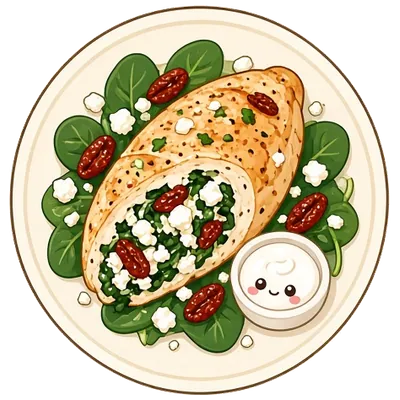
Spinach and feta stuffed chicken
50 min
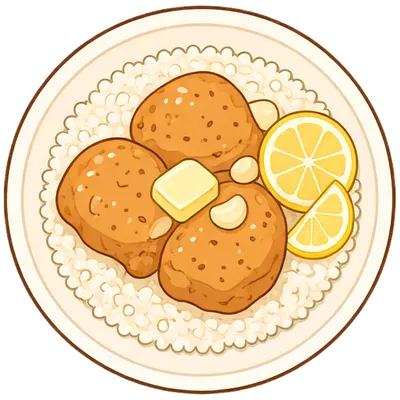
Lemon garlic chicken over rice
30 min
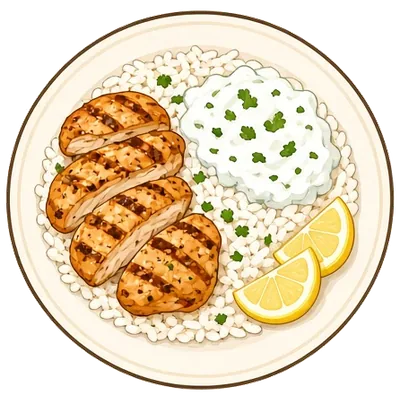
Chicken souvlaki bowls with tzatziki
55 min
Balsamic caprese chicken
35 min
High-protein dinners ›Mediterranean dinners ›What to make with cucumber and tomatoes ›What to make with tomatoes and feta cheese ›What to make with chicken and cucumber ›