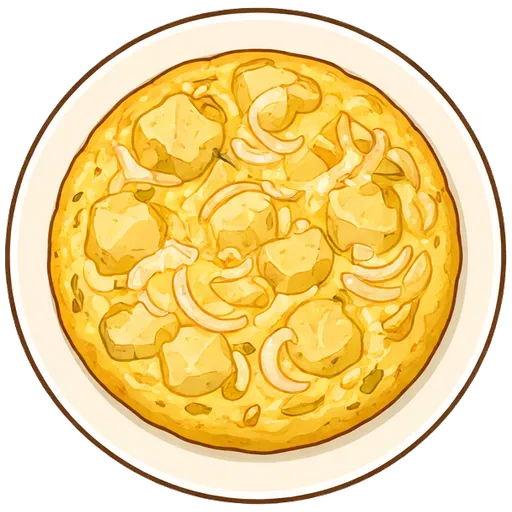
Spanish potato omelette
Soft potatoes and sweet onion folded into eggs and cooked into a thick golden cake, the Spanish classic that’s just as good cold the next day.
- 60 min total
- 40 min hands-on
- A little more hands-on
- Serves 4
- About $2.12 a serving
- 610 calories
- Good the next day
- Vegetarian
- Gluten-free
- Dairy-free

Dolly says: Make the full amount. It’s just as good for lunch the next day.
Ingredients
For 4 servings.
- 1½ lb yukon gold potatoes
- 1 yellow onion, thinly sliced
- 6 large eggs
From your pantry
- ¾ cup olive oil
- 1½ tsp salt, divided
- ¼ tsp black pepper
Each serving has about 610 calories, 13 g protein, 35 g carbs and 48 g fat, and costs about $2.12 at typical US grocery prices. Both are estimates from what the recipe uses.
Missing something?
- No yukon gold potatoes? Russet potatoes or red potatoes work.
- No yellow onions? White onions or red onions work.
Steps
Tap an underlined word for a quick explanation.
the potatoes, them , and cut them into thin slices, about ⅛ inch. the onion.
Peel. Peeling means removing the skin with a vegetable peeler or a small knife. It takes off tough or bitter skins, though potato and carrot skins are fine to leave on unless the recipe insists.
How you’ll know: The color underneath is even all over, with no patches of skin left behind.
Halve. Halving means cutting something into two equal pieces. Even halves cook at the same speed, so one doesn’t dry out while the other finishes.
How you’ll know: The two pieces look like mirror images of each other.
Lengthwise. Lengthwise means cutting along the long side, from stem to tip, which gives long pieces. Crosswise is the other way, straight across the middle, which gives short, round ones.
How you’ll know: Lengthwise halves of a zucchini look like two little canoes; crosswise pieces look like coins.
Thinly slice. Thinly slicing means cutting slices about an eighth of an inch thick, roughly two coins stacked. Thin slices cook in seconds and soften fast, which quick dishes need.
How you’ll know: A slice bends a little when you hold it by one edge, and slow, steady cuts beat fast ones.
Heat the oil in a 10-inch nonstick over medium heat. Add the potatoes, onion and 1 teaspoon salt and gently turn them in the oil.
Skillet. A skillet is a frying pan: wide and flat with low, sloped sides. The shape lets steam escape, so food browns instead of stewing.
How you’ll know: It’s the pan you’d fry an egg in, and a 10 or 12 inch one handles most recipes.
Medium heat
Turn the heat to low and cook, turning them gently every few minutes, 20 to 25 minutes, until the potatoes are completely soft but barely browned.
Low heatTimer: 20 min
 Dolly’s tip: You’re poaching them in oil, not frying. They’re ready when a slice breaks apart with a spoon.
Meanwhile, the eggs in a large bowl with ½ teaspoon salt and the pepper until no streaks of white remain.
Whisk. Whisking means beating quickly with a whisk or a fork to blend things together. It smooths out lumps and mixes eggs, oil or sauces evenly.
How you’ll know: It all looks one even color and texture, with no streaks or lumps.
Set a strainer over a heatproof bowl and tip the potatoes into it to off the oil. Save 1 tablespoon of the oil; the rest keeps for cooking another day.
Drain. Draining means pouring off liquid, like tipping pasta into a colander or spooning extra fat out of the pan. Pour hot grease into a can or jar, not the sink, where it hardens and clogs the pipes.
How you’ll know: Only a few drips are left, and the food isn’t sitting in a puddle.
the warm potatoes and onion into the eggs and let them sit for 5 minutes, so the potatoes soak up some of the egg.
Fold. Folding means mixing gently by scooping from the bottom and turning it over the top, instead of stirring hard. It keeps light mixtures airy and soft things like berries or herbs in one piece.
How you’ll know: You use slow, wide strokes and stop as soon as there are no streaks left.
Timer: 5 min
Wipe out the skillet, add the saved tablespoon of oil and heat over medium. Pour in the egg mixture, spread it flat, and cook 5 to 6 minutes, until the edges are set and the bottom is .
Golden brown. Golden brown is the color of good toast, somewhere between yellow and light brown. It means the outside is cooked and crisp but not burnt.
How you’ll know: It looks like toast and smells toasty; dark brown with a bitter smell means it went too far.
Medium heatTimer: 5 min 30 sec
Run a spatula around the edge. Put a large plate upside down over the pan, hold it tight, and flip the pan over so the omelette lands on the plate.
Dolly’s tip: Do it over the sink in one quick, confident move. Any bits stuck to the pan can be pressed back into place.Slide it back into the pan, cooked side up, and cook 4 to 5 minutes more, until the middle feels firm when you press it and no liquid egg runs out.
Medium heatTimer: 4 min 30 sec
Food safety: For the safest eggs, cook until the whites are fully set and the yolks begin to thicken. Dishes made with eggs are done at 160°F.
Slide it onto a board and let it 5 minutes, then cut into wedges. It’s lovely warm or at .
Rest. Resting means letting cooked meat sit for a few minutes before you cut it. It keeps cooking gently, and more of the juice stays in the meat instead of running onto the board.
How you’ll know: Loosely covered with foil, it stays hot, and very little juice runs out when you slice it.
Room temperature. It means letting something sit out until it’s no longer fridge-cold, about 30 to 60 minutes for butter or eggs. It helps things blend smoothly, but never leave raw meat out over 2 hours.
How you’ll know: It feels cool, not cold, and butter dents easily when you press it.
Timer: 5 min

Plan this in Dollop, and get the grocery list
Dollop puts this dinner on a night that suits your week, lists only what you still need to buy, and walks you through each step while you cook.